Last updated: October 6, 2026
TL;DR A Foundry rollout runs on three clocks. A bootcamp takes days, a first production use case takes weeks to a few months, and scale takes quarters. Data access and Ontology design set the pace, not the software. Our Foundry and AIP implementation team unified 18 warehouse and inventory systems for a logistics operator in 5 months. Start with one decision and your source-system list.
A Palantir Foundry implementation connects source systems, builds pipelines, models the Ontology, and ships operational apps. First production use cases land in weeks to a few months. Enterprise scale takes quarters and hinges on data access and adoption.
RAND researchers reported in 2024 that more than 80% of AI projects fail, roughly twice the rate of ordinary IT projects. Foundry programs rarely die on the platform. They die in week three. Waiting on a firewall exception.
Or a service account. Or an SAP admin who’s booked solid until next month.
In our delivery work, Palantir Foundry implementation is mostly a coordination problem wearing a software costume. The tooling is mature. Data Connection, Pipeline Builder, the Ontology, and Workshop all do what the docs say they do. What slows teams down is everything around them, from access approvals to a data model nobody agreed on before the first sync ran.
This guide covers the six phases we plan around, how data integration actually works in Foundry, the three timelines worth tracking, and an honest look at who should do the build. It’s written for the data or IT leader who has to defend a go-live date in front of a steering committee. You’ll get ranges, not promises.
What Does a Palantir Foundry Implementation Actually Include?
Foundry implementation comes down to four jobs in sequence. Connect source systems, turn raw data into trusted datasets, model those datasets as Ontology objects, and ship applications or AIP agents that people use to make real decisions.
The Ontology is the piece that makes Foundry different, because it maps your datasets to the things your business actually runs on, like orders, trucks, suppliers, and work orders, plus the actions people are allowed to take on them. Palantir’s platform summary treats Foundry, the Ontology, Code Repositories, and Workshop as layers of one stack.
So what isn’t on that list? Change management. And it’s the piece that quietly sinks programs. Thoughtworks argues that making data available doesn’t create value on its own, and that people and adoption are where data platforms break, not the pipelines or the storage layer that engineers tend to obsess over. We agree. A beautifully modeled supplier object that nobody opens on Monday morning is just an expensive table.
Scope matters too. In one PAL4C engagement with a global logistics operator, the job was to unify supplier, inventory, and logistics data from 18 disconnected warehouse and inventory systems, then put AIP demand-forecasting agents on top that could trigger procurement actions. That’s a real implementation. A dashboard on one clean extract isn’t.
Our Palantir Foundry and AIP services hub lays out how we scope each piece. If the Ontology itself is still fuzzy, start with our explainer on how the Palantir Ontology works.
The Six Phases of a Foundry Implementation
Foundry programs move through six phases. Discover, connect, build pipelines, model the Ontology, ship applications and AIP, then operate. The phases overlap, and our planning range for the first five is 3 to 6 months.
Here’s how they break down.
These durations are PAL4C’s planning ranges for a first production use case with several source systems, not Palantir benchmarks, and they mostly run in parallel rather than end to end. That’s why the column adds up to more than six months. Real projects don’t.
| Phase | What happens | Output | PAL4C planning range | Who’s involved |
|---|---|---|---|---|
| 1. Discover and scope | Pick one decision to change, list every source system behind it, name the access owners, agree on a success metric | Use-case brief and source inventory | 1 to 3 weeks | Business owner, data lead, lead architect |
| 2. Connect | Set up Data Connection sources, install agents for systems behind the firewall, run first syncs | Raw datasets landing on a schedule | 2 to 6 weeks | IT, security, source-system admins |
| 3. Build pipelines | Clean, join, and test data in Pipeline Builder or Code Repositories | Trusted, scheduled datasets | 3 to 8 weeks | Data engineers |
| 4. Model the Ontology | Define object types, links, and actions, then map datasets to them | Objects the business recognizes | 3 to 6 weeks | Domain experts, Ontology designers |
| 5. Apps and AIP | Build Workshop apps, writeback actions, and AIP agents around the decision | A workflow people use daily | 4 to 8 weeks | End users, app builders, AI engineers |
| 6. Operate and scale | Monitor pipelines, manage permissions, onboard the next use case, train internal owners | Run book and a use-case backlog | Ongoing | Platform team, business owners |

Phase 1 is the one teams skip. Big mistake.
When discovery is rushed, every later phase inherits the ambiguity, and you end up modeling an Ontology around whatever tables happened to arrive first rather than around the decision you were supposed to improve, which is how a 4-month plan turns into 9 months without anyone noticing the exact week it slipped. It happens quietly.
Phase 4 deserves its own budget line. Our Ontology design and modeling work usually starts during Phase 3, because waiting for perfect pipelines before touching object types wastes weeks that you’ll want back later, when the business starts asking for changes. Phase 5 is where users finally see something. That’s where operational applications built in Workshop and AIP agents with governed actions come in. New to AIP? Our primer on what Palantir AIP actually does covers the basics.
How Does Data Integration Work in Foundry?
Data lands in Foundry through Data Connection, which manages sources, syncs, and agents for systems behind a firewall. Pipeline Builder or Code Repositories then transform it into clean datasets that feed the Ontology.
Palantir’s Data Connection documentation breaks the intake layer into sources, syncs (batch, streaming, file, and media), agents that run inside your network for systems Foundry can’t reach directly, and exports that push data back out. Once a source exists, Pipeline Builder can import it and create syncs from there.
Palantir calls Pipeline Builder Foundry’s primary application for data integration. It handles batch, streaming, and incremental pipelines, and it can write to datasets or straight into the Ontology. Good tool. Honestly underrated by engineers who assume point-and-click means toy.
Where do the weeks go? Not into the connector. They go into the agent install. An agent is software running on a machine inside your network, so your security team reviews it like any other software, and that review has its own queue and its own calendar. Plan for it early. Phase 1, not Phase 2.
Batch, Streaming, or Incremental?
Default to batch. Seriously.
Nightly ERP extracts cover most planning and reporting decisions. Incremental makes sense when tables are huge and mostly append-only, like shipment events or transaction logs, because reprocessing the full history every night burns compute for nothing and nobody gets a better answer for it. Streaming earns its complexity when minutes matter, like telematics, sensor feeds, or a dock schedule that changes hourly. Pick streaming because the decision needs it. Not because it sounds modern.
Pipeline Builder or Code Repositories?
- Pipeline Builder fits most joins, cleaning, and mapping work, and a wider group of people can read and maintain it later.
- Complex logic, heavy custom libraries, or a team that wants everything in code review? That’s Code Repositories territory.
- Mixed is fine.
- Our default is Pipeline Builder until something forces code, because the person maintaining the pipeline in year two probably wasn’t on the original build team.
If you want someone on your side to own sources after go-live, Palantir’s Data Connection speedrun course walks through S3, Postgres, and REST API connections. Worth an afternoon. For the heavier lifting, our Foundry data integration engineering team handles source onboarding, agent setup, and pipeline design.
How Long Does a Foundry Implementation Take? The Three Clocks
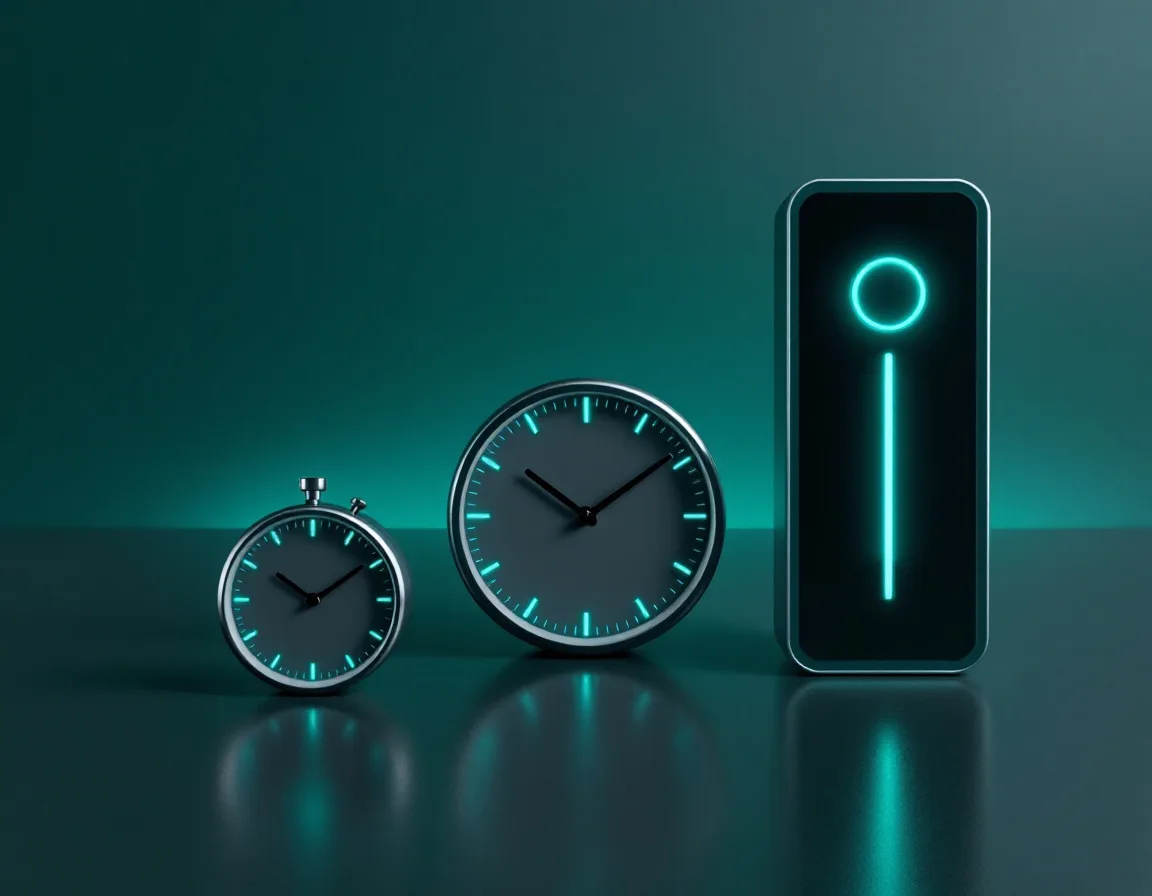
Track three clocks. A bootcamp runs 1 to 5 days. A first production use case takes weeks to a few months, and our planning range is 3 to 6 months. Enterprise scale takes quarters.
Most timeline arguments happen because two people are reading different clocks. The sponsor saw a bootcamp go from nothing to a working app in a week. The data lead knows the SAP sync isn’t approved yet. Both are right.
| Clock | What it measures | Typical length | What sets the pace |
|---|---|---|---|
| Bootcamp | Zero to a working use case on your own data | 1 to 5 days | How much real data you can bring on day one |
| First production use case | Kickoff to a workflow people use every day | Weeks to a few months (PAL4C plans for 3 to 6 months) | Source access, data quality, Ontology design |
| Scale | Use case two through twenty, across regions and teams | Quarters | Adoption, platform operations, internal skills |
Clock one flatters everyone.
In its 2023 write-up on AIP bootcamps, Palantir describes going from zero to a use case in 1 to 5 days, compared with months for a traditional pilot. And the company’s Q1 2026 quarterly filing notes that it generally runs pilots and bootcamps at its own expense. Cheap way to learn whether your data is ready. Or isn’t.
The catch? Bootcamp data is usually a hand-pulled extract, and production data has to arrive on a schedule, through an approved sync, with permissions attached and someone accountable when it doesn’t show up. That gap is the second clock.
For a real reference point, the logistics engagement above ran 5 months from kickoff to deploy, with full cross-region visibility in the first quarter, and the client saw a 34% reduction in procurement delays and $12M in annual savings. You can read the anonymized version on our Foundry case studies page. Five months, 18 systems. Not a bootcamp.
What Stretches the Timeline
Almost none of it is software. The research on failed data and AI programs reads like a list of Foundry phase gates, and once you line them up, you can see where your own plan is likely to slip.
RAND’s analysis named two root causes near the top, misunderstanding the problem and lacking the data to solve it. Those map straight onto Phase 1 and Phase 2. Gartner predicted in 2024 that at least 30% of generative AI projects would be abandoned after proof of concept by the end of 2025, citing poor data quality, weak risk controls, escalating costs, and unclear business value. That’s Phases 3 and 5. And the MIT NANDA study from 2025 found 95% of organizations saw no measurable P&L return from generative AI, with only 5% of custom enterprise AI tools ever making it into production. Brutal numbers.
Here’s what actually stretches a Foundry plan, in roughly the order it shows up.
- Source access approvals. Every system has an owner, and finding them takes days while getting a yes can take weeks.
- Installing the Data Connection agent, which needs a VM, a network path, and a security review.
- Bad data you didn’t know you had. Duplicate supplier IDs across 4 ERPs will humble anyone.
- Ontology rework, usually because objects were modeled on source tables instead of on the decision.
- What about permissions and security markings? Bolted on late, they force rework across pipelines and apps.
- Arcesium’s take on failed data implementations points at mismatched expectations, hidden dependencies, and scope changes. We’d underline scope changes twice.
- Adoption. The last mile, and the one nobody budgets for.
None of these show up in a vendor demo. All of them show up by week six.
Partner, Palantir FDEs, or In-House? Who Should Implement
Use a partner when you need speed and have no Foundry engineers yet. Use Palantir’s forward deployed engineers when Palantir assigns them to your account. Build in-house when Foundry will be a long-term core platform.
Most mature programs blend all three. According to coverage of the MIT NANDA research, purchased or partnered AI approaches succeeded about 67% of the time, versus about 33% for internal builds, though that study looked at AI tools broadly and not at Foundry partners specifically.
Bias disclosed. PAL4C gets paid when you hire a partner, so read that stat with one eyebrow raised. It’s still the best data available, and it matches what we see.
So let’s be plain about who we are. PAL4C Labs is a Palantir-exclusive consultancy. We implement Foundry and AIP for enterprise data, IT, and operations teams who need a working use case in production, not another demo. We don’t split attention across a dozen platforms, and we bring reusable accelerators from past builds, which is how we keep most deployments within a range of 3 to 6 months.
| Option | Best for | Speed to first use case | Does knowledge stay with you? | Watch out for |
|---|---|---|---|---|
| Implementation partner | Teams with no Foundry engineers who need a dated plan | Fastest when the partner has shipped similar use cases | Only if enablement is written into the contract | Partners who build and leave |
| Palantir FDEs | Accounts where Palantir assigns its own engineers | Fast, with deep product knowledge | Partly | Capacity is Palantir’s call, not yours |
| In-house team | Organizations treating Foundry as long-term core infrastructure | Slowest at first | Fully | Hiring and ramp time for Foundry skills |
Palantir’s forward deployed engineer role exists to embed engineers with customers, and they’re good. But Palantir reported $1.633B in Q1 2026 revenue, up 85% year over year, across 1,007 customers in that same filing. That’s a lot of accounts sharing one pool of FDEs. I’m inferring there. It isn’t a stretch.
Partner options are maturing too. Research firm ISG has started assessing Palantir ecosystem partners, which tells you buyers now want a way to compare them.
- Hire a partner if your first use case has a hard date and fewer than two people internally have shipped on Foundry.
- Palantir already has engineers on your account? Use them, and make sure your own people sit next to them.
- Build in-house when Foundry is going to run core operations for years, with a partner or Palantir covering the first build while your team ramps. Our Foundry training and enablement program exists for exactly that handoff.
- Skip all three if you can’t name the decision yet.

What Happens After Go-Live?
Go-live starts the operating phase. Someone has to watch pipeline health, manage permissions, monitor AIP agent behavior, and queue the next use case. Without a named owner, the build starts to drift.
Source schemas change. A vendor renames a column. Pipelines fail at 2 a.m., and nobody sees the alert. Small stuff, until a planner opens a Workshop app on Monday and the numbers are from Thursday. Trust drops fast.
That’s what our Foundry platform operations and MLOps service covers, from monitoring and permission hygiene to model and agent upkeep, or we help your team set up the same run book internally if you’d rather own it from day one.
A Pre-Kickoff Readiness Checklist
Run through this before anyone signs a statement of work. Each gap you close here is a week you don’t lose later. Boring list. Big payoff.
- One decision named, with an owner and a number you want to move.
- Every source system behind that decision, listed with its admin. Names, not departments.
- Has security seen the Data Connection agent requirements? If not, send them this week.
- Network paths confirmed.
- Your ugliest table, pulled as a sample extract before kickoff so nobody is surprised in week four.
- Permissions sketched early.
- Two or three end users who’ll test every week and tell you the truth.
- An executive sponsor who can break ties on scope, fast.
- Someone who owns day two.
Where to Start
Three things to carry into your next planning meeting. Track all three clocks separately, so a fast bootcamp doesn’t set expectations for production. Treat source access and Ontology design as the real critical path, because the software rarely is. And choose your delivery model with your eyes open, including our bias.
If you’re scoping a first Foundry use case, bring us your source-system list and one decision you want to change. We’ll map your first 90 days in Foundry, including where the timeline is likely to stretch and what to fix before kickoff. No slide deck required.
Before You Kick Off
Realistically, How Fast Can We Get Something Into Production?
Three to six months is our planning range for a real deployment across several source systems. A narrow use case on clean, reachable data can go faster, in weeks. Our logistics engagement took 5 months from kickoff to deploy across 18 systems. Bootcamps are faster still. They aren’t production.
What Does the Whole Thing Cost, Implementation Included?
Short answer, there’s no list price. Palantir negotiates platform pricing deal by deal, and a Redress Compliance analysis describes a negotiated annual platform fee plus compute-based consumption, with comparable deals varying by 2 to 3 times. Implementation effort sits on top of that and swings with the number of sources, how messy the data is, and how much scope creeps in. Anyone quoting you a precise total before seeing your source inventory is guessing. We’d rather scope one use case, price that, and let the second one be cheaper because the pipelines and Ontology already exist.
Can Foundry Pull Data From SAP, Salesforce, and Snowflake?
Usually, and the connector is rarely the slow part. Data Connection handles batch, streaming, and file syncs, plus agents for systems behind your firewall. The time goes into service accounts, access approvals, and deciding which tables you actually need. Confirm current source types for your environment in Palantir’s documentation.
How Do Data Connection, Pipeline Builder, and Code Repositories Split the Work?
Data Connection brings data in. Pipeline Builder and Code Repositories transform it, the first visually and the second in code, and both can feed the Ontology.
So the Bootcamp Went Well. Now What?
Wrong milestone to celebrate, slightly. The better question is what changes between bootcamp data and production data. Next comes replacing manual uploads with scheduled Data Connection syncs, hardening pipelines, setting permissions, and naming owners for each piece. That’s the start of the second clock.
Do We Actually Need a Partner?
Not always. If you already have engineers who’ve shipped on Foundry and a sponsor who’ll protect scope, you can build in-house. But if your first use case has a hard date and your team is learning the platform at the same time, a partner shortens the path, as long as knowledge transfer is part of the deal.