
Last updated: October 7, 2026
TL;DR In August and September 2026, Palantir rebuilt its certification ladder. Courses on Palantir Learn are free, Foundry Aware is free, Associate exams cover data engineers, app developers, and AI engineers, and Specialist exams are hands-on builds at $350 per attempt. A certificate proves one person passed a test. Your team still needs practice on its own data, so plan training inside your Foundry and AIP implementation rather than after it.
Palantir Foundry training starts free on Palantir Learn. Certification runs from Foundry Aware (free) to Associate exams for data engineers, app developers, and AI engineers, then hands-on Specialist exams at $350 per attempt.
Foundry rollouts rarely die on the technology. They die on people. The platform goes live, the implementation crew rolls off, and half a year later two engineers understand the pipelines while everyone else files tickets and waits.
So Palantir Foundry training belongs in the project plan, not the onboarding wiki. Timing helps, too. Palantir just swapped its old certification program for a three-level ladder, and almost nothing ranking for this topic reflects the change yet.
This guide covers how the 2026 certifications work, which path fits which role, the free places to practice, how non-partners get an exam code, and the 30/60/90-day plan we’d hand an enterprise team on day one. I lead Foundry and AIP delivery at PAL4C Labs, and our Palantir training and enablement work sits inside that practice.
One correction before we start. PAL4C isn’t a Palantir partner, and we don’t issue Palantir certifications. We prepare people. Palantir certifies them.
How Does Palantir Foundry Training Work?
Palantir Foundry training runs through Palantir Learn, where courses are free, plus hands-on practice in the free AIP Developer Tier. Certification sits on top as a separate step, and the exams need a code from Palantir.
All learning courses are free, according to Palantir’s Learn FAQ, while exams carry a cost. Courses are grouped into role paths, like the data engineering path, so a pipeline builder and a business analyst don’t start in the same room.
Practice is the other half. Palantir’s developer resources page points builders to build.palantir.com, learn.palantir.com, the Developer Community, and an OSDK tutorial, while the AIP Developer Tier gives individuals a free environment to build in.
Free is real. Free is also lonely.
Nobody on Palantir Learn knows your plant codes are stored as text in one ERP and integers in another, or that your finance team won’t trust a number that didn’t pass through SAP first. That context is what turns a finished course into a person who can ship something on Monday morning, and it’s the piece every enterprise team has to supply itself, through an internal champion, a vendor, or a firm like ours.
Courses teach the platform. Your data teaches the job.
What Does the 2026 Palantir Certification Ladder Look Like?
Three levels. Foundry Aware is the free starting point, Associate exams test core builder knowledge in three tracks, and Specialist exams test hands-on building over three hours for $350 per attempt.
Associate went live on August 3, 2026 on certification.palantir.com with Data Engineer, Application Developer, and a brand-new AI Engineer exam. All three are timed, open-book, and multiple choice. Old vouchers no longer work.
Specialist came next. Per Palantir’s Specialist launch announcement, the first sitting ran September 30, 2026, with monthly sessions after that. Each exam lasts three hours, split into phases. Plan runs 20 minutes without AIP. Build runs 120 minutes with AIP switched on. Modify runs 40 minutes, AIP off again. The whole thing is proctored over Zoom, delivered by Ontologize, and open only to people who’ve passed the matching Associate.
| Level | Tracks | Format | Cost | Valid for | Prerequisite |
|---|---|---|---|---|---|
| Foundry Aware | One general certification | Based on the Foundry & AIP Aware course | Free | Not stated in Palantir’s posts | None |
| Associate | Data Engineer, Application Developer, AI Engineer | Timed, open-book, multiple choice | Not published, ask Palantir when requesting a code | 2 years | Foundry Aware recommended as the foundation |
| Specialist | Data Engineer Specialist, Application Developer Specialist, AI Engineer Specialist | 3-hour phased build exam, proctored over Zoom | $350 per attempt | 2 years | Matching Associate |

I like the phase design a lot. You plan for 20 minutes with no AI help, build for two hours with it, then spend 40 minutes changing course without it again. Palantir is checking whether you can think before you prompt. Good.
Holding an older Professional certification? Palantir staff confirmed it stays valid until it expires. No need to rush a retake.
Which Training Path Fits Which Role?
Match the path to the job. Executives need Aware-level fluency, analysts need app and analysis skills, and data engineers, app developers, and AI engineers each get their own Associate and Specialist track.
Pushing every role through one generic course wastes everyone’s week. An operations VP doesn’t need PySpark. A pipeline engineer needs PySpark and a lot more besides. One Foundry data engineer listing on Dice asks for Pipeline Builder, Code Repositories, Ontology, Workshop, Contour, Quiver, PySpark, SQL, and TypeScript Functions. Nine tools. One job.
| Role | Where to start | Certification target | PAL4C Academy fit |
|---|---|---|---|
| Executive or business leader | Foundry & AIP Aware course on Palantir Learn | Foundry Aware, optional | Executive & Business Leaders track |
| Business user or analyst | Aware course, then the Builder Foundations badge | Foundry Aware | Business & Data Users track |
| Data engineer | Palantir Learn data engineering path | Data Engineer Associate, then Specialist | Technical Teams track plus our Foundry program |
| Application developer | build.palantir.com and the OSDK tutorial | Application Developer Associate, then Specialist | Technical Teams track plus our Foundry program |
| AI engineer | AIP Developer Tier and AIP courses on Palantir Learn | AI Engineer Associate, then Specialist | Technical Teams track plus our AIP & Enterprise AI program |
AI Engineer is the newest track, and it’s where we see the most muddled thinking. Teams assume prompt writing is the skill. Mostly it isn’t. An AIP agent is only as good as the objects and actions it can reach, which is why we put AI engineers through Ontology fundamentals before they touch an agent, and why anyone still fuzzy on the basics should read what Palantir AIP actually does first. Our AIP agent development projects lean on the same order.
App developers end up in Workshop and the OSDK, the same ground our operational application builds cover. And our own Foundry program, From Data to Operational Intelligence, is pitched at beginner to intermediate for business and technical people together, moving from Foundry fundamentals and data integration through pipelines, the Ontology, data products, analytics, applications, and operational workflows.

Where Can Your Team Practice Foundry for Free?
Three free routes. The AIP Developer Tier gives each person a working environment, the Foundry & AIP Builder Foundations badge checks the basics, and Palantir’s Speedrun course walks through a first end-to-end workflow.
Per Palantir’s Builder Foundations badge post, the badge is a 10-question quiz where seven correct answers pass, and the result is shareable on LinkedIn. The recommended prep is the Speedrun course, which has you build your first end-to-end workflow.
- Developer Tier first. Free, and the closest thing to a sandbox nobody will scold you for breaking.
- Ten questions, seven to pass. That’s the whole badge.
- Do your data engineers have realistic data to practice on? Build a scrubbed extract from production so the exercises look like the work they’ll actually do.
- Speedrun course before anything else, ideally in week one.
Is a badge a credential? Not really. It’s a confidence check, and that’s underrated. Analysts who’ve quietly decided they aren’t technical need one thing to go right early, and a quiz they can pass before lunch does more for adoption than another kickoff deck.
How Do You Get Palantir Certified Without Being a Partner?
Ask for a code. Non-partners can request a free Foundry Aware voucher by contacting Foundry Support from a Developer Tier account, and paid exams need a promo code from a Palantir point of contact or Foundry Support.
Official guidance on the non-partner route comes from Palantir staff on the community forum. Open a Developer Tier account, contact Foundry Support from it, and ask for the Aware voucher. Customers with an account team can go through their Palantir point of contact instead, which is the same route an earlier community thread on exam codes describes.
Specialist adds friction. Pass the matching Associate. Pay $350. Book a monthly slot, then build for three hours on Zoom with a proctor watching. Budget for a retake, not because your people are weak, but because building under a clock with a stranger watching is its own skill and some very good engineers freeze.
Where does PAL4C sit? Beside the exam, never inside it. We run prep, practice builds, and review sessions. Palantir and Ontologize own the test.
Which Foundry Training Option Should Your Team Pick?
Pick by goal. Self-serve Learn suits motivated individuals, an AIP Bootcamp suits sponsors proving one use case fast, and consultancy-led enablement suits organizations training several roles on their own data at once.
Most enterprises end up mixing two or three. The AIP Bootcamp, per Carahsoft’s channel package, is hands-on with Palantir engineers and aims to move a use case from concept to MVP within days, which makes it a strong opener and a thin long-term plan.
| Option | What you get | Cost | Best for | Where it falls short |
|---|---|---|---|---|
| Self-serve Palantir Learn | Role paths, courses, Aware prep | Courses free, exams extra | Self-starters and certification prep | Nobody ties it to your data |
| AIP Bootcamp | Days of hands-on building with Palantir engineers | Arranged through Palantir or channel partners such as Carahsoft | Proving one AIP use case fast | Short, so depth per role stays shallow |
| Instructor-led course | Structured classroom on platform basics | Varies by provider | Teams that need a fixed schedule | Generic sample data |
| Consultancy-led enablement, like PAL4C LABS Academy | Role-based Modules, Tracks, or a Full Journey on your use cases | Scoped per program | Organizations training several roles at once | Costs more than free, obviously |
| On the job, paired with the build team | Real pipelines, real Ontology, real deadlines | No separate line item | Teams mid-implementation | Skills stay with whoever happened to pair |
Grain of salt here. We sell row four, which makes me the least neutral person alive on whether row four is worth paying for.
Here’s the honest version. If you’ve got eight builders, a strong internal lead, and a Foundry instance already in production, the free route plus on-the-job pairing can carry you a long way. You probably don’t need us for that.
Outside enablement pays off on breadth. Training executives, analysts, and three engineering roles in parallel, on your own data, while the platform is still being built, is a coordination job more than a teaching job, and it’s the reason PAL4C LABS Academy offers a single focused Module, a role-based Track that strings several modules together, or a Full Journey that runs courses, workshops, and hands-on exercises across a whole organization.
A 30/60/90-Day Enablement Plan for an Enterprise Team
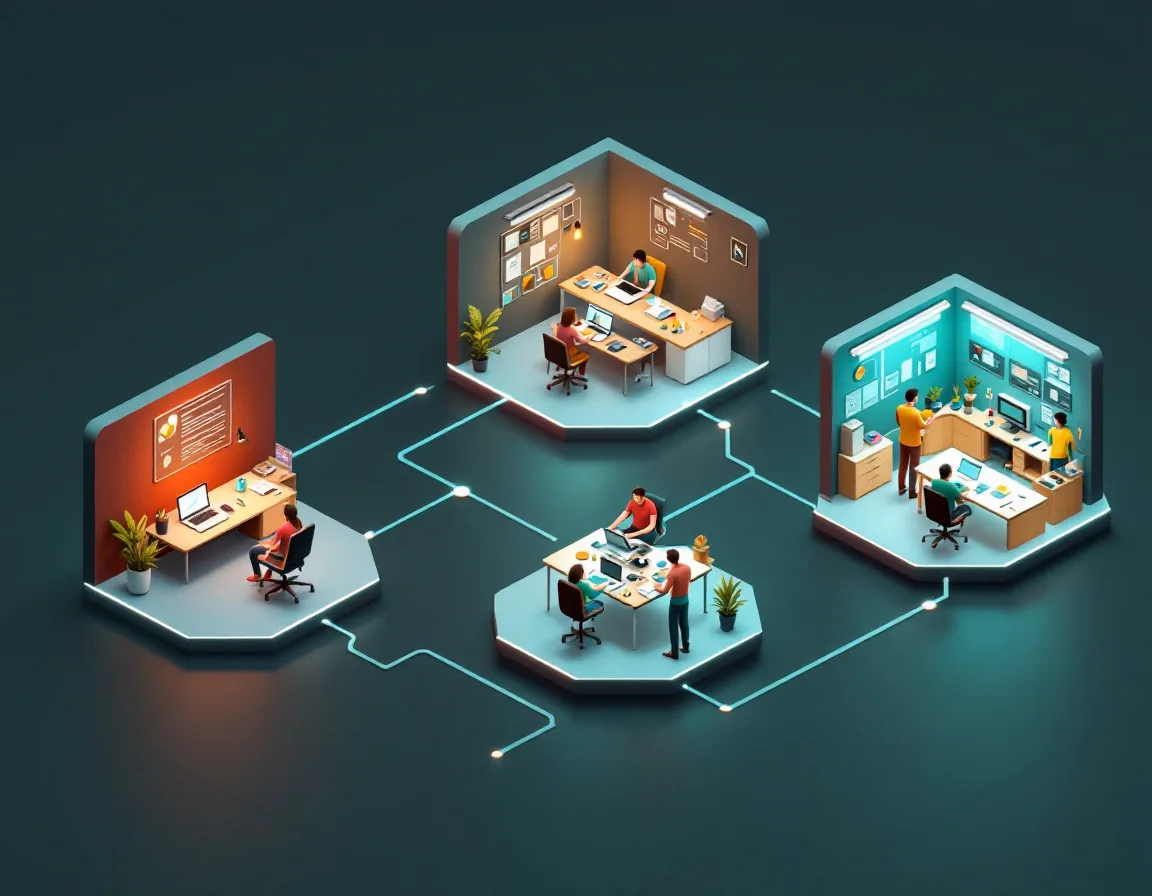
Adjust the dates. Keep the order. This is the sequence we’d sketch for a team getting Foundry live this quarter, and it runs in parallel with the build phases in our Foundry implementation guide, not after them.
The First 30 Days
- Everyone who’ll touch Foundry takes the Foundry & AIP Aware course. Executives included.
- Developer Tier accounts for every builder, set up in week one so nobody is stuck waiting on access in week three.
- One live use case to train against. Just one.
- Who owns enablement internally? Name that person now, with time carved out of their calendar.
Days 31 to 60
- Builders follow their role paths on Palantir Learn, matched to the table above.
- Data engineers pair inside the data integration and engineering work, not beside it.
- Analysts earn the Builder Foundations badge.
- Request Associate exam codes around day 45, because the request runs through people and people take time.
Days 61 to 90
- Associate exams for the data engineers, app developers, and AI engineers who’ve shipped something real.
- Your internal team pushes one change to production with zero help from the implementation crew. That’s the real exam.
- Only the people who’ll own the platform long term go for Specialist, booked into the next monthly session.
- A blunt skills retro covering what stuck, what didn’t, and who’s still filing tickets for work they should be doing themselves.

Why bother with this much structure? Look at what’s riding on it. On our logistics engagement, the build unified 18 separate systems in five months and delivered 34% fewer procurement delays and $12M in annual savings. Results like that hold only if someone inside the client can keep the Ontology, the pipelines, and the forecasting agents running long after the consultants have packed up their laptops and moved to the next project.
Why Do In-House Skills Decide Whether Foundry Sticks?
Platforms decay without owners. If nobody inside can fix a broken pipeline or extend the Ontology, every change becomes a ticket to an outside team, and adoption slows until the platform turns into an expensive reporting tool.
Labor market data points the same way. The World Economic Forum’s Future of Jobs Report 2025 expects 39% of core skills to change by 2030, and 63% of employers name skills gaps as the top barrier to transformation. And 85% plan to prioritize upskilling.
Plans are cheap, though. The same report says that if the world’s workforce were 100 people, 59 would need training by 2030 and 11 of them would be unlikely to get it. Scale that to a 40-person Foundry rollout and four or five people get left behind. Usually the ones closest to operations.
LinkedIn’s 2025 Workplace Learning Report, as summarized by Thirst, found 91% of organizations say continuous learning matters more than ever, and 55% prioritize internal mobility, yet only 24% run a structured program for it. Everyone agrees. Few build it.
We’ve watched one failure pattern enough times to name it. One person builds the pipelines, nobody else learns them, that person takes a better offer, and the Ontology freezes in whatever shape it had on their last day. Nothing breaks loudly. It just stops changing.
The riskiest week in any Foundry program is the one after the implementation team rolls off. That’s where platform operations and MLOps support either props up a capable internal team or quietly replaces skills that never got built. Only one of those is cheap.

Building the Bench Before You Need It
So what should stick? Palantir’s 2026 ladder is cheap to start and serious at the top, with free Aware and Learn courses at one end and a $350 proctored build exam at the other. Role paths matter more than the number of people you push through a course. And practice on your own data is what turns a certificate into someone you can hand a production ticket.
PAL4C Labs is a Palantir-exclusive consultancy for Foundry and AIP implementation and training. Through PAL4C LABS Academy, we train executives, business users, and technical teams on their own Foundry use cases, so the skills stay with the client when our delivery work ends. We don’t certify anyone. We get people ready to pass, and ready to build.
Start with a skills baseline. List every person who’ll touch Foundry, their role, and what they can build today, then hold it up against the role table above. If the gaps run wider than your internal capacity, our Foundry training programs are built for exactly that, and you can send us your baseline for a second opinion.
Training Questions Teams Ask
Is Palantir Foundry Training Actually Free?
Mostly, and the exceptions are small. Palantir Learn courses are free, Foundry Aware certification is free, and the AIP Developer Tier gives you a free place to practice. You pay for Associate and Specialist exams.
How Does a Non-Partner Get a Palantir Exam Code?
Foundry Support is the usual route. Open a Developer Tier account, contact Foundry Support from it, and request a Foundry Aware voucher. Customers can also ask their Palantir point of contact for a promo code.
What Do Palantir Certifications Cost in 2026?
$350 per attempt for each Specialist exam. Foundry Aware is free. Palantir hasn’t published an Associate price in its announcements, so ask for the current figure when you request your code. And budget for at least one Specialist retake per team, because a timed, proctored build exam trips up people who are perfectly capable at their desks.
Is a Palantir Certification Worth It for Your Team?
Wrong question, slightly. A certification is worth it when it confirms someone can do work your team needs done, and it’s close to useless as a decoration on a LinkedIn profile for a person who never touches the platform. For data engineers and app developers who’ll own production Foundry work, the Associate is a cheap sanity check and the Specialist is a real signal, since you build under time pressure for three hours. For executives? The Aware course matters more than the credential. Funny thing, the people who push hardest for certification targets are usually the ones furthest from the build.
Realistically, How Long Does It Take to Learn Foundry?
Short answer? Weeks for fluency, months for ownership. Our 30/60/90-day plan assumes builders are certifying at Associate level by the third month while working on a live use case.
Associate vs Specialist, Does the Gap Actually Matter?
A lot. Associate is a timed, open-book, multiple-choice exam that checks what you know. Specialist is a three-hour proctored build in Plan, Build, and Modify phases that checks what you can do, and you can’t sit it until you’ve passed the matching Associate.
What Happens to Old Professional Certifications?
Zero changes until they expire. Palantir confirmed older Professional certifications stay valid through their expiry date, so holders can move to the new Associate and Specialist exams on their own schedule.