Last updated: October 7, 2026
TL;DR Palantir earns its place in a supply chain as a decision layer above the planning and execution systems you already run, not as a replacement. Foundry’s Ontology joins ERP, WMS, TMS, and supplier data, and AIP agents propose actions that planners approve. Our Palantir Foundry and AIP implementation team used that pattern to cut procurement delays 34% for a global logistics operator. Start with one recurring decision.
Palantir supports supply chains by connecting ERP, WMS, TMS, and supplier data in Foundry’s Ontology, then using AIP agents to recommend actions like rebalancing inventory or rerouting shipments, with planners approving each decision. Your planning suite stays.
Most conversations about Palantir for supply chain start with the wrong question. Buyers want to know if it replaces SAP IBP or Kinaxis. It doesn’t. Nvidia, of all companies, kept its planning stack and its ERP when it brought Palantir in, and we’ll get to that.
The harder problem lives in the gap between a signal and an action. A late inbound container shows up in the TMS. The warehouse system still expects it at the dock tomorrow morning, a purchase order sits open in the ERP, and the planner who could fix all three finds out from an email two days later, after the expediting fees have already landed on somebody’s budget.
Sound familiar?
That gap is where Foundry and AIP pay for themselves. Or don’t.
What follows covers where Palantir fits in a supply chain stack, one dispatch decision traced from signal to approved action, the use cases that tend to reach production, who’s using it in public, and where it’s simply the wrong buy. It’s written for supply chain, logistics, and data leaders sizing up a Palantir program. Expect ranges and tradeoffs. No magic.
How Does Palantir Help Supply Chain Teams?
Two moves. Palantir joins supply chain data into one operational model, then turns signals into recommended actions. Foundry’s Ontology represents shipments, suppliers, and inventory as objects. AIP agents reason over those objects and propose moves that people approve.
Palantir’s Ontology documentation describes it as an operational layer that ties data to real things like plants, equipment, products, and customer orders. It has semantic pieces (objects, properties, and links) and kinetic pieces (actions and functions). The kinetic half is the part most supply chain demos skate past.
Why does that half matter? A dashboard tells you a truck is late. An Ontology with actions lets a planner reassign the load, shift the dock appointment, and write the change back to the source system from the same screen. Watching a problem versus closing it. Small distinction on paper. Huge one at the dock door.
AIP sits on top of that model. Palantir’s AIP overview frames it as the way to build LLM-powered workflows and agents that work against your Ontology, inside the permissions you’ve already set. So an agent can read a shipment object, check the lane’s congestion, compare it with what usually happens on a Thursday afternoon, and draft a recommendation, but it can’t wander outside the guardrails your team defined. That’s the point. If AIP is new territory, our primer on Palantir AIP covers the basics. For the freight and warehouse version of all this, look at how we build decision intelligence for logistics teams.
Where Does Palantir Sit Next to SAP IBP, Kinaxis, o9, and Blue Yonder?
SAP IBP, Kinaxis, o9, and Blue Yonder build the plan. Palantir sits above them, connecting that plan to execution data and helping people act when reality drifts from it. It doesn’t replace them.
Nvidia is the cleanest public proof. Constellation Research reported in 2026 that Nvidia runs Foundry, AIP, and the Ontology with its own Nemotron models and cuOpt optimization library, on premises, while keeping SAP IBP, its ERP, and Anaplan. Nothing got ripped out.
That’s the shape we’d recommend for almost anyone. Gartner Peer Insights files Kinaxis, o9, and Blue Yonder alongside SAP IBP in its supply chain planning market, and those tools are very good at building a constrained plan on a fixed cadence. Palantir’s own positioning, according to TheStreet’s May 2026 report, is to sit above existing enterprise software, even though the same piece names SAP, Oracle, Blue Yonder, Manhattan Associates, and Aera as competitors. Both things are true at once. Overlap exists, mostly around control tower features. The core jobs still differ.
| Dimension | Planning suites (SAP IBP, Kinaxis, o9, Blue Yonder) | Palantir Foundry and AIP |
|---|---|---|
| Core job | Build and balance the plan | Connect cross-system data and act on exceptions |
| Data model | Planning model inside the suite | Ontology of objects, links, and actions across any source |
| Rhythm | Planning cycles and S&OP | Event-driven, as signals arrive |
| Main users | Demand and supply planners | Planners, dispatchers, buyers, and operations leads |
| AI role | Forecasting and optimization inside the suite | AIP agents that reason over the Ontology and propose actions |
| Where decisions land | The suite’s own plan | Back into ERP, WMS, TMS, or the planning suite through actions |
| Replaces the other? | No | No |
Read the bottom row twice.
An expensive mistake we see runs the other direction. A team watches a Foundry demo, notices how flexible it is, and decides to rebuild a perfectly decent S&OP process inside it. Can it be done? Sure. Is it a good use of six months and a steering committee’s patience? Almost never.
From Delay Signal to Approved Action in One Dispatch Decision
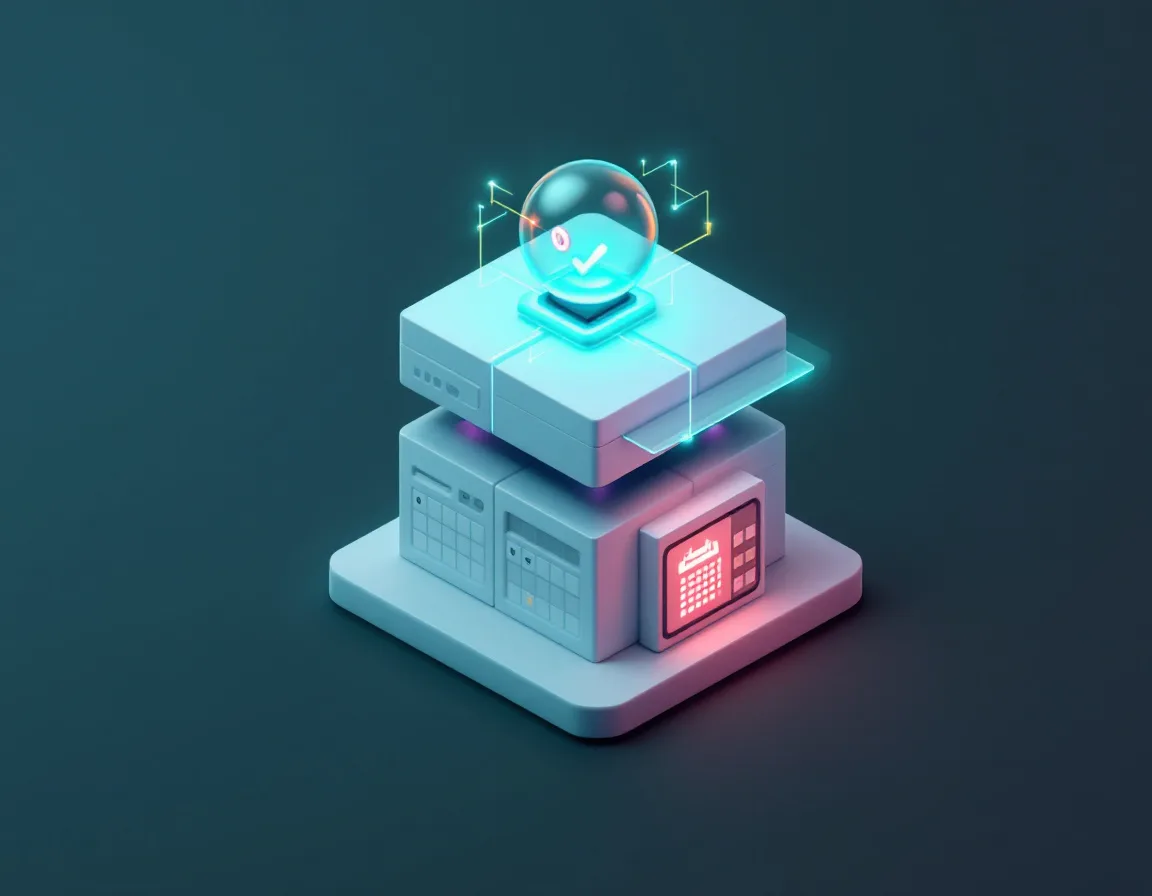
Here’s the whole loop, end to end. It’s an illustrative scenario based on PAL4C’s dispatch offering, not a specific client’s numbers.
Every cross-dock wrestles with one question all shift long. Should this truck leave now, or wait for additional volume? Leave early and you ship air. Wait too long and a service deadline slips. Most dispatchers answer it from experience and a spreadsheet, which holds up fine until volume spikes, a carrier runs late on two lanes at once, or your best dispatcher takes a week off and the backup starts guessing.
Eight inputs feed the decision, grouped here into six.
- Current load, plus the truck’s capacity
- Incoming shipments and their expected arrivals, meaning when they’ll actually show up rather than when the booking said they would
- Service deadlines
- How congested is the lane right now?
- Historical truck fill on that lane, which tells you whether waiting tends to pay off
- Warehouse status
None of these live in one system. Load and capacity usually sit in the TMS, arrival estimates come from carrier feeds or telematics, and warehouse status lives in the WMS, which means three teams, three logins, and three versions of reality.
In Foundry, they become six linked object types. Shipment, Truck, Lane, Facility, Load, and Dispatch Event. A Load links to a Truck and to its Shipments. A Shipment links to its origin Facility and its Lane. Once those links exist, an agent can ask questions that cross all three systems without anyone hand-writing a join before sunrise. If object types and links still feel fuzzy, our walkthrough of the Palantir Ontology shows how they fit together.
Now the recommendation. In this scenario, AIP suggests holding the truck for 45 minutes. Current fill is 72%. Projected fill after the expected arrivals land is 91%. Nineteen points. The dispatcher sees that in a Workshop app built for dispatchers, with the inputs behind it, and makes the call.
A recommendation, not an autopilot. That line from our dispatch offering is a design principle, not legal cover. The dispatcher can accept, adjust, or reject, and in the way we’d model it, that choice gets recorded as a Dispatch Event that feeds the next recommendation.
Watch the rejections. When an experienced dispatcher overrides the agent, there’s usually something the model can’t see yet, like a driver’s remaining hours or a customer who quietly tolerates a late drop on Fridays. Capture a reason code every time. Six weeks of override reasons will teach you more about your network than six weeks of model tuning.

Which Supply Chain Use Cases Actually Ship?
In our experience, five use cases reach production reliably. Inventory rebalancing, supplier risk, procurement exceptions, dispatch and routing, and demand forecasting tied to replenishment. Each has a repeat decision, a clear owner, and data sitting in ERP, WMS, or TMS.
Palantir’s food and beverage offering page lists applications such as AIP Inventory Rebalancing, AIP Material Harmonization, AIP Supplier Management, and AIP for Supply Chain Logistics. Treat those as patterns, not products you install. Your version changes shape the moment it meets your data. Every time.
| Use case | The decision | Data it needs | Who approves |
|---|---|---|---|
| Inventory rebalancing | Move stock between sites before a stockout | Inventory by location, open orders, in-transit stock | Inventory planner |
| Supplier risk | Which supplier or part is exposed, and what’s the fallback | Supplier master, purchase orders, lead times, quality history | Sourcing or category manager |
| Procurement exceptions | Expedite, split, or re-source a late order | Purchase orders, advance ship notices, receipts, forecast | Buyer |
| Dispatch and routing | Leave now or wait, and on which lane | Load, capacity, arrivals, deadlines, congestion | Dispatcher |
| Demand forecasting | How much to order, and for which site | Sales history, promotions, seasonality | Demand planner |
Forecasting gets its own warning. It’s a pipeline problem long before it’s a model problem, because a forecast built on duplicate SKUs and missing promotion history is confidently wrong, and no amount of model tuning will tell you which SKUs are secretly the same part. That’s why our time series forecasting work starts with sales history and feature pipelines before anyone argues about model choice.
Our strongest proof is our own work. A global logistics operator came to us running 18 disconnected warehouse and inventory systems. We built a Foundry Ontology that unified supplier, inventory, and logistics data, then put AIP demand forecasting agents on top that trigger procurement actions. Procurement delays fell 34%. The client saves $12M a year. Cross-region visibility arrived in the first quarter, and the full build ran 5 months from kickoff to deploy. The anonymized details sit on our Foundry case studies page.
Eighteen systems, one model. Easy to say.
Who Uses Palantir for Supply Chain?
Publicly reported users include Nvidia, Tyson, General Mills, Wendy’s, and Advance Auto Parts. Nvidia applies Foundry and AIP across its hardware supply chain, and Advance Auto Parts uses Palantir for replenishment and pricing, per 2026 reporting.
Nvidia’s case is the one people quote. Network World reported that Nvidia will use Foundry to analyze its supplier network for risks, and Constellation notes that each Vera Rubin rack holds about 1.3 million parts. Per rack. Try tracking that in a spreadsheet.
Food is the other cluster. AgNavigator reported in November 2025 that Tyson, General Mills, and Wendy’s are Palantir clients, and Palantir described using AI to predict demand dips and reroute shipments with heavy human-in-the-loop oversight. That last phrase tells you more than the logos do. TheStreet’s piece adds Advance Auto Parts, applying Palantir to replenishment and pricing, and describes one workflow that reached a small group of users in two months, then scaled by the end of the quarter.
Careful with logos. A customer list tells you Palantir can sell into a category, but it doesn’t tell you which decision changed, how far it moved, or what it cost to get there, and public reporting rarely answers any of those three. Ask any vendor or partner for the decision. Not the brand.
We hold ourselves to that bar. PAL4C Labs is a Palantir-exclusive consultancy that implements Foundry and AIP for logistics, supply chain, and operations teams who need a decision to change, not another dashboard. We build the pipelines, the Ontology, and AIP agents that act through governed actions, and we judge the work by the decision it moves.
Why Is Supply Chain Visibility Still So Hard?
Visibility stays hard because supply chain data sits in systems that were never built to share it, and it thins out past your direct suppliers. McKinsey’s 2024 survey found 60% of respondents had thorough visibility into tier-one suppliers.
Flip that around. Four in 10 couldn’t claim that much even for the suppliers they pay directly, and visibility further down the chain is rarer still. Not great.
Foundry doesn’t fix missing data. Nothing does. What it fixes is data you already have but can’t join, scattered across an ERP, a WMS, a supplier portal, and a few spreadsheets someone emails around every Friday, and in our delivery work that’s the bigger share of the mess. Here’s the readiness check we run before a supply chain kickoff.
- One ID per supplier. Duplicate vendor records across two or three ERPs are the first thing we look for.
- Do purchase orders, advance ship notices, and receipts share a key you can actually join on?
- Inventory by location, at the grain the decision needs. Bin, site, or region. Pick one.
- Timestamps with known time zones.
- A named owner and a working service account for every source system.
- Lead times that reflect what suppliers really deliver, not what someone typed into the vendor master years ago.
Gaps here aren’t a reason to wait. They’re your first sprint. Our data integration and pipeline engineering team handles source onboarding and pipeline design, and it’s the line item buyers most like to trim. Don’t.
What Does a Realistic First 90 Days Look Like?
Ninety days should get one decision into a small group’s hands. Weeks 1 to 3 cover scoping and source access, weeks 4 to 8 build pipelines and the Ontology, and weeks 9 to 12 go live with users.
Those ranges are our planning defaults for a single decision, not a Palantir benchmark. TheStreet’s reporting described one workflow reaching a small group in two months, while our 18-system logistics deployment took 5 months to full deploy. Different finish lines. Both honest.
| Weeks | Focus | Done when |
|---|---|---|
| 1 to 3 | Pick the decision, list every source, request access | Every source has an owner and an approved connection path |
| 4 to 8 | Pipelines, Ontology objects and links, first actions | Planners recognize the objects and trust the numbers |
| 9 to 12 | Agent recommendations in a Workshop app for a small user group | Users act on recommendations, and overrides get logged |
Where does it slip? Weeks 1 to 3, usually, and rarely for technical reasons. Access approvals and security reviews for on-premises connectors run on someone else’s calendar. Plan for that.
If you finish week 12 with one dispatcher group or one buyer team using recommendations every day, logging their overrides, and asking for the next lane or the next supplier category, you’ve done the hard part, because the second use case reuses the pipelines and objects from the first and moves noticeably faster. Our Foundry implementation timeline guide breaks the phases down further if you’re building a plan for a steering committee.

When Is Palantir the Wrong Tool for a Supply Chain?
Palantir is the wrong tool when one system already holds the data, when your planning process works, or when nobody will own the decisions it surfaces. It’s also wrong if you can’t name the decision to change.
Consider the source. We only do Palantir work, so every buyer we steer away is a project we don’t get, and I’d still rather lose that deal than sell a platform to fix a spreadsheet problem.
A single-site distributor with one WMS and decent reports? Use the WMS’s own reporting, or a BI tool, and keep the money. A team that only wants a sharper statistical forecast may get there inside its planning suite’s forecasting module. Foundry is an enterprise platform with enterprise pricing, so the economics only work when the decision you’re changing is worth real money every week and touches enough sites, lanes, or suppliers to justify the build. And if planners won’t act on recommendations, or don’t have the authority to, AIP agents just produce well-formatted noise.
The honest test is short. Can you name a decision, made at least weekly, that crosses three or more systems and costs real money when it’s wrong? If so, Palantir deserves a serious look. If not, wait.
Pick One Decision and Start There
Bottom line, Palantir doesn’t replace your planning suite. It connects the plan to what’s actually happening and helps people act on the gap, which is a different job and, honestly, a harder one, because reality changes hourly and plans don’t. Ontology actions are what turn visibility into writeback. The agent proposes. A person decides.
If you’re weighing Palantir for supply chain work, bring us one recurring logistics decision, the systems that feed it, and the person who makes the call today. We’ll sketch the Ontology and first recommendation with you and tell you plainly whether Palantir fits. For dispatch specifically, our logistics decision intelligence offering shows what the finished workflow looks like.
Supply Chain Questions We Get
Does Palantir Replace SAP IBP or Kinaxis, or Sit on Top of Them?
It sits on top, in any architecture we’d sign off on. Nvidia kept SAP IBP, its ERP, and Anaplan while adding Foundry and AIP, according to Constellation Research. The planning suite builds the plan, and Palantir connects it to execution data and handles the exceptions.
So What Is a Supply Chain Control Tower, and Can Foundry Be One?
IBM describes a control tower as a connected, personalized dashboard of data, key business metrics, and events across the supply chain, built to help teams understand, prioritize, and resolve critical issues in real time. Foundry can play that role. The difference shows up in the resolve part, since Ontology actions can write a decision back to the ERP or TMS instead of stopping at a chart. A tower that only shows problems is an expensive smoke alarm.
Do AIP Agents Act on Their Own?
Only as far as you let them. In the setups we build, agents recommend and people approve, like a dispatcher deciding whether a truck waits 45 minutes. Automating low-risk actions can come later, once the override data shows the agent gets them right.
Which Companies Use Palantir for Supply Chain Work?
Five names show up in public reporting. Nvidia, Tyson, General Mills, Wendy’s, and Advance Auto Parts.
How Long Before a Supply Chain Use Case Is Actually Live?
Faster than an ERP project, slower than a demo. TheStreet described one workflow that reached a small group in two months and scaled by quarter end. Our own logistics engagement took 5 months from kickoff to deploy across 18 systems, with cross-region visibility in the first quarter. The variable that matters most isn’t the software. It’s how quickly you get access to the source systems, and whether someone with authority has agreed on which decision you’re changing before the first sync runs.
Why Is Supplier Visibility Still So Hard to Get?
Data plumbing, mostly. McKinsey’s 2024 survey found 60% of respondents had thorough visibility into tier-one suppliers, which leaves 4 in 10 short of that even for direct suppliers. Deeper tiers are harder still.