Turn Historical Data Into Better Decisions About What Comes Next.
PAL4C LABS builds production-ready forecasting and predictive analytics solutions for demand, revenue, capacity, inventory and operational planning — connected to the Palantir Foundry, Microsoft Fabric or Azure environment your teams already use.
Forecasting That Fits Your Existing Data Environment
We don’t ask you to stand up a separate forecasting stack. Models are built to read from, and deliver back into, the data platforms your teams already operate.
Forecasting Built Around Real Business Decisions
Seven common forecasting problems we build for, each matched to the technique and data pattern it actually needs.

Demand Forecasting
Predict future product, service and customer demand to support planning and inventory decisions.

Revenue Forecasting
Model future revenue patterns using historical performance, seasonality and relevant business drivers.

Capacity Forecasting
Anticipate workforce, production, infrastructure and operational capacity requirements.

Inventory Forecasting
Improve inventory planning by predicting demand and identifying potential shortages or excess stock.

Supply Chain Forecasting
Support procurement, production and logistics planning with forward-looking demand signals.
Predictive Maintenance
Use time-series signals and anomaly detection to identify changing equipment behavior and support proactive maintenance.

Anomaly Detection
Identify unusual patterns in operational time-series data before they become larger problems.
From Forecast to Operational Decision
A forecast is only as valuable as the decision it reaches. A number sitting in a notebook or a disconnected dashboard doesn’t change what a planner does next — it has to arrive inside the workflow where the decision actually gets made.
A planning team forecasting regional demand doesn’t need a more accurate model in isolation — they need that forecast to reach the reorder decision inside the system they already use, automatically, before the stockout happens. That’s the gap most forecasting programs never close, and it’s the one we build for from day one.
Typical forecast error reduction reported from AI-driven operations forecasting, per McKinsey’s research on AI-driven operations forecasting.
Of chief supply chain officers say they’re still unclear on the actual return from their AI investments, even as AI absorbs a growing share of digital budget, per Gartner’s August 2026 survey of supply chain leaders.
The models work. The gap is usually an integration and measurement problem, not a modeling one — which is why we scope the decision a forecast needs to change, and how that gets measured, before the pilot starts, not after.
From Forecasting Models to Production Systems
Three stages, whether you engage us for one or take the full path from a first model to a fully operationalized forecasting system.
Forecasting Discovery
Assess the forecasting problem, available data, current approach and business decision the model needs to support.
- Forecasting feasibility assessment
- Data quality review
- Historical pattern analysis
- Baseline modeling
- Recommended approach
Forecasting Development
Build and validate forecasting models against real business data, not a curated sample.
- Feature engineering
- Model selection
- Benchmarking
- Hyperparameter tuning
- Validation
- Forecast evaluation
Production Forecasting
Operationalize forecasting as part of the existing data and business environment.
- Automated pipelines
- Model versioning
- Monitoring
- Retraining
- Forecast delivery
- Downstream integration

Better Forecasts Start With Better Data
Most forecasting failures don’t happen because the algorithm was wrong. They happen because the input data was inconsistent across systems, seasonality and promotions were never encoded as features, or the historical record had gaps nobody accounted for.
We consolidate historical data across the source systems it actually lives in, whether that’s an existing Foundry Ontology, a Fabric lakehouse, or Azure, and build the features that give a model something real to learn from: seasonality flags, promotional calendars, external drivers, and the data quality checks that catch bad inputs before they reach the model.
- Historical data consolidation across source systems
- Seasonality, promotions and external driver features
- Missing data handling and data quality review
- Direct integration with Foundry, Fabric and Azure

The Right Model for the Right Forecast
A stable, low-volatility product line and a new product with three months of history don’t get the same treatment. Different time series need different approaches, and no single algorithm is the right answer for every forecasting problem.
We work across classical statistical methods, machine learning approaches, multivariate models that account for related series, hierarchical forecasting for products that roll up into categories and regions, and probabilistic forecasting when a range matters more than a single number. Every approach gets benchmarked and validated against your actual data before it’s selected, not assumed upfront.
- Statistical, machine learning and multivariate methods
- Hierarchical forecasting across products, regions or categories
- Probabilistic forecasting where a range matters more than a point estimate
- Benchmarking and validation before model selection
A Forecast Is Only Valuable When Someone Can Act on It
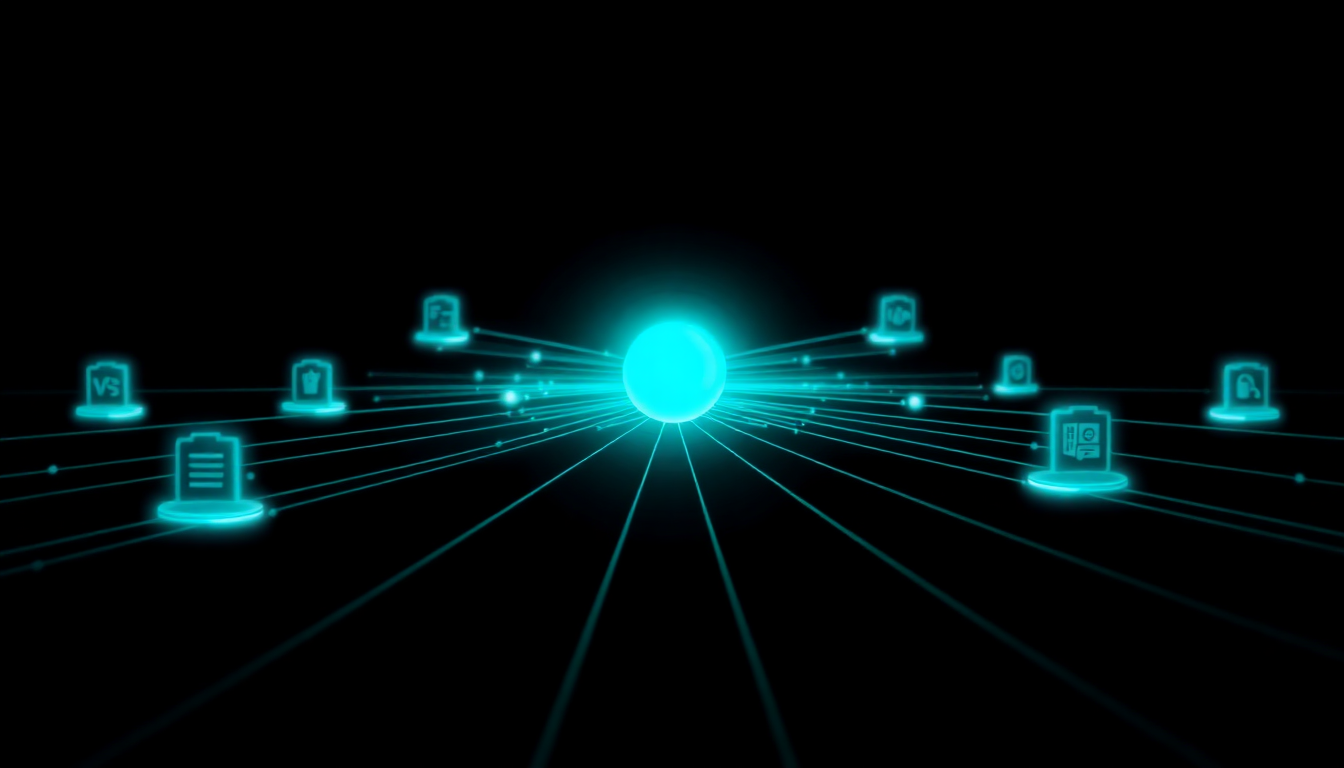
A forecast that lives in a notebook doesn’t get used. We deliver forecasts into the systems planners already work in, so acting on the number doesn’t require a separate login, a manual export, or someone remembering to check a dashboard.
If you’re running Palantir Foundry, that typically means a forecast delivered as an Ontology object your existing workflows and applications can reference directly. If your data lives in Microsoft Fabric or Azure, forecasting pipelines read from your existing data estate and deliver back into it, rather than duplicating it into a standalone tool.
- Palantir Foundry Ontology objects and workflows
- Microsoft Fabric and Azure delivery
- Planning systems and operational applications

Keep Forecasts Accurate as Reality Changes
Forecasts degrade as real-world patterns shift. A model that was accurate at launch can quietly drift for two quarters before anyone notices it’s been stale since the last time someone touched it.
We set up monitoring on both model performance and the input data itself, with a retraining cadence defined by how fast the underlying patterns in your data actually change, not an arbitrary schedule. Performance alerts flag drift early, and versioning keeps a clear record of what changed and when.
- Forecast accuracy and drift monitoring
- Data quality monitoring on live inputs
- Defined retraining cadence and model versioning
- Performance alerts for continuous improvement
From Forecasting Question to Production
Scope and data readiness determine how long each stage takes — we give real numbers after discovery, not before.
DISCOVER
Understand the business decision and forecasting problem.
PREPARE
Assess data quality and build the required features.
MODEL
Develop, compare and validate forecasting approaches.
INTEGRATE
Connect forecasts to existing platforms and workflows.
MONITOR
Track performance, retrain models and continuously improve.
What Better Forecasting Can Enable
Better Planning
Make decisions with a clearer view of future demand and capacity.
Lower Uncertainty
Replace manual assumptions with data-driven forecasts.
Faster Decisions
Put forecasts directly into the workflows where decisions happen.
Continuous Improvement
Monitor forecasting performance and adapt as conditions change.
Forecasting With Data Engineering Behind It
Enterprise Data Integration
Forecasting connected to the data environment you already operate.
Applied AI & ML
Models selected around the actual forecasting problem, not a default technique.
Operational Delivery
Forecasts designed to reach the people and systems that use them.
Production Mindset
Monitoring, retraining and lifecycle management built into the solution.
Bring Forecasting Into Your Foundry Environment
For organizations already using Palantir Foundry, PAL4C LABS designs forecasting workflows that work with the existing data environment and Ontology, rather than creating a disconnected forecasting stack alongside it.

PAL4C LABS is an independent, Palantir-focused technology consultancy and is not currently a certified Palantir partner.
Forecasting Across Industries
Manufacturing
Production capacity, demand and predictive maintenance forecasting across plants and lines.
Retail & Consumer
Demand and inventory forecasting across products, channels and seasonal cycles.
Supply Chain & Logistics
Procurement, production and logistics forecasting driven by forward-looking demand signals.
Energy & Utilities
Load, capacity and equipment behavior forecasting for operational planning.
Financial Services
Revenue and demand forecasting grounded in historical performance and business drivers.
Healthcare & Life Sciences
Capacity and operational forecasting to support planning across facilities and services.
This is a good fit if:
- You’re forecasting demand, revenue or capacity today using spreadsheets or a basic statistical model and want to know what AI-driven forecasting actually adds for your data
- A forecasting tool is already in place but the output doesn’t get used because it lives outside the systems planners actually work in
- Your data already lives primarily in Microsoft or Palantir environments and you want forecasting connected to that stack
Look elsewhere if you need:
- A packaged, off-the-shelf forecasting SaaS product with no custom integration work — a faster, cheaper path if your data is already clean and centralized
- Forecasting at extreme scale across thousands of SKUs and dozens of markets with a dedicated in-house data science team already running the program
Part of the Broader Palantir Stack
Forecasting is one way Analytics & Decision Intelligence creates value on top of a Foundry implementation.
Analytics & Decision Intelligence
The broader analytics practice this forecasting work sits under.
Foundry & AIP Implementation
The implementation hub forecasting connects into.
Data Integration & Engineering
The pipelines that feed forecasting models.
Platform Operations & MLOps
Where forecasting models get monitored and retrained.
Questions Before the Kickoff Call
What is time-series forecasting?
Time-series forecasting uses historical, time-ordered data — sales, revenue, usage, sensor readings — to predict what a value is likely to do next. It accounts for patterns like seasonality, trend and the external factors that move the number, rather than treating each data point in isolation.
What types of business problems can forecasting solve?
Any planning decision that depends on an unknown future value: how much demand to expect, what revenue is likely next quarter, how much capacity or inventory to hold, when equipment is likely to need maintenance, or whether an operational metric is behaving unusually. The common thread is a decision that gets better with a data-driven estimate instead of a guess.
What data is required for forecasting?
At minimum, consistent historical data for whatever’s being forecasted, with enough history to capture the patterns that matter, seasonality especially needs multiple cycles. Beyond that, the more relevant external drivers you can supply, promotional calendars, pricing changes, macro indicators, the better the model can explain what’s actually moving the number instead of just curve-fitting the past.
How does PAL4C LABS integrate forecasting with Palantir Foundry?
For organizations running Foundry, we build forecasting models on top of the data already modeled in your Ontology and deliver the output back into it as Ontology objects your existing applications and workflows can reference directly, instead of standing up a disconnected forecasting tool.
Can forecasting work with Microsoft Fabric or Azure?
Yes. Forecasting pipelines can read directly from an existing Fabric or Azure data estate and deliver output back into the dashboards, data models or applications your teams already use, without duplicating the data into a separate system.
How do you monitor forecasting models after deployment?
We set up drift monitoring on both the input data and the model’s accuracy, so a forecast that’s quietly become unreliable gets flagged instead of continuing to feed decisions unnoticed. Retraining cadence is defined upfront based on how fast the underlying patterns in your data actually shift.
How do you measure forecasting ROI?
We treat that as part of the deliverable, not an afterthought. The specific business decision or metric a forecast is meant to improve gets defined at the start of the engagement, alongside how it’ll be measured, so a report six months later, “this changed by this amount”, is something we can actually produce instead of reconstruct after the fact.
How long does a forecasting engagement take?
It depends on how many series are in scope and how ready the underlying data is. A single, well-scoped forecasting problem with clean data moves faster than one spanning many product lines with data scattered across systems. We size the timeline after a discovery review, not before.
Ready to Make Better Decisions About What Comes Next?
Tell us what you’re forecasting today, where the data lives, and what decision the forecast needs to improve. We’ll help you determine whether a forecasting solution makes sense and what the right approach could look like.
Palantir Insights
Related guides

Palantir Foundry MLOps: How to Run Models, Pipelines, and AI in Production Without Surprises
Palantir Foundry MLOps explained. Modeling Objectives, staging and production releases, batch vs live deployment, external models, monitoring, drift, and cost.
Read the guide →
Palantir Foundry for Manufacturing: Predictive Maintenance, Quality, and Production Planning in Practice
How manufacturers use Palantir Foundry for predictive maintenance, quality traceability, and production scheduling, plus Warp Speed, rollout plan, and fit.
Read the guide →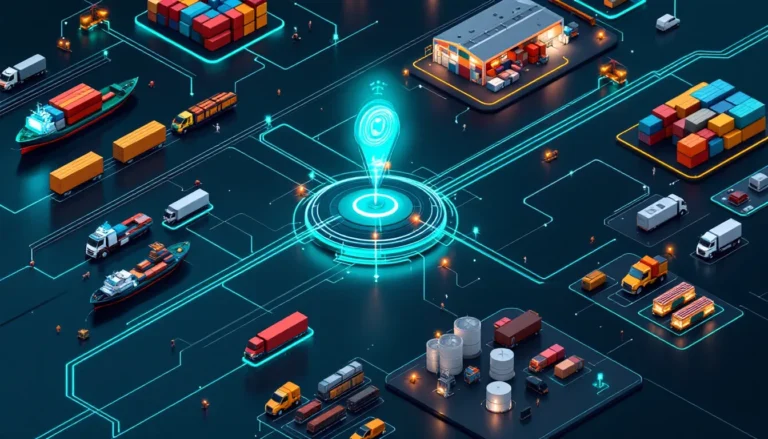
Palantir for Supply Chain: How Foundry and AIP Turn Logistics Data Into Decisions
See where Palantir Foundry and AIP fit a supply chain stack next to SAP IBP or Kinaxis, with a dispatch example, real use cases, and a realistic 90-day plan.
Read the guide →
Palantir Foundry vs Databricks vs Snowflake: Which One Fits Your Enterprise?
Palantir Foundry vs Databricks vs Snowflake, compared by a Foundry implementer. Core purpose, AI tooling, pricing, integrations, and when each one fits best.
Read the guide →